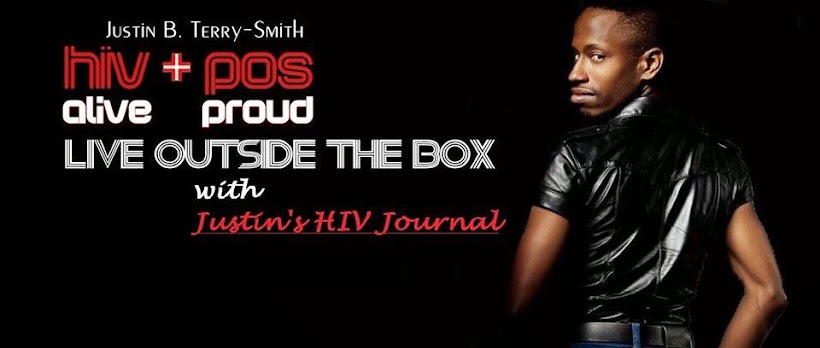
Justin's HIV Journal

Sunday, July 8, 2012

Just*in Time: June 2012

Just*in Time: June 2012


Photo by Don Harris © Don Harris Photographics, LLC. All rights reserved

Justin,
You probably get messages like this a lot, but I’m a little worried. I had unprotected sex about six to seven months ago. I was a virgin and he was, too. He claimed he was “clean” and everything, but my state of mind wasn’t really all that good afterwards. Anyway, I am worried I might have been exposed to HIV, but I haven’t had any of the symptoms, like lymph nodes swelling, though about two weeks ago I got a cold…well, I hope that it was a cold. My glands didn’t swell, and I got a sore throat for a bit and I kept having these heat spikes where my temperature would go up and then down, but only lasting a few seconds. I’m still sniffling. Toward the end of the major symptoms my gums started to ache and my jaw hurt, too. I might be worrying over nothing but I just hope you can give me some advice. I mean if I have it can I still live a long life?
—Harvey

Well, after reading your question I wanted to break it down so I, for one, better understand. Okay, so he said he was a virgin. Ask yourself this, “How can you look at someone and tell they are a virgin?” The answer is, you can’t. Also using substances that lower your inhibitions make you more susceptible to HIV/AIDS. So we must watch out for ourselves and ask questions.
If you are worried that you might have been exposed then the best thing to do is to get tested for HIV. HIV is a tricky disease and it is different with everyone. Some people have no symptoms at all, even when they’ve been infected for a long time. Also, if you are having a sore throat, heat spikes, and other viral symptoms, you might want to see a doctor. The best thing that you could do in either situation—whether it is a common cold or something HIV-related—is to get medical attention. Also, if you are infected with HIV you can still live a long healthy life, but you will have to take care of yourself more than you used to. In a study researchers predicted that a twenty-year-old person starting HIV medications between 1996 and 1999, the early years of combination antiretroviral drug therapy, could expect to live an additional thirty-six years, to the age of fifty-six, than if they were not on treatment. Over time the number of years increased significantly. A twenty-year-old who started treatment between 2003 and 2005 could expect to live an additional forty-nine years, to the age of sixty-nine. Now these numbers are great but make sure that you stick with your medications, exercise, and eat right. You will be okay, negative or positive. ☺
Hi Justin,
I subscribed to your YouTube channel recently and I absolutely adore your videos. Not only are you incredibly courageous, you’re also so well spoken and intelligent! You emanate strength, and everything that you’re doing for the community as a whole is truly remarkable. Praise aside, I do have a question for you: What are your thoughts on the HIV [antibody] testing window period? It’s something that truly disturbs me; the thought that I could be positive but test negative regardless is torturous. I’ve been tested many times in my life, all of which have thankfully come back negative, but I struggle with never having peace of mind. The constant doubt lingers, “Okay, so you’re ‘negative,’ but what if your results were only negative because you were exposed too recently for the test to detect?”
—Rebecca

Yes, I’m a big advocate for people knowing their status. The window period is something that we cannot do anything about now. I tell people who are sexually active to get tested every three months. Getting tested every three months can shave down that window a tad. Also, there is even a better test to close that window known as the Architect HIV Ag/Ab combo assay, which can catch the infection early. Studies have shown that this particular test may detect HIV up to twenty days earlier than antibody-only tests, which is important in controlling the spread of the virus.
Justin B. Terry-Smith has been fighting the good fight since 1999. He’s garnered recognition and awards for his work, but he’s more concerned about looking for new ways to transform society for the better than resting on his laurels. He started up in gay rights and HIV activism in 2005, published an HIV-themed children’s book, I Have A Secret (Creative House Press) in 2011, and created his own award-winning video blog called, “Justin’s HIV Journal”: justinshivjournal.blogspot.com. Now, with this column, Justin has found a way to give voice to the issues that people write to him about. Visit his main Web site at www.justinbsmith.com. He welcomes your questions at jsmithco98@hotmail.com.
June 2012

Justin's HIV Journal: Justin Runs the Rebel Race 2012 (Maryland/DC I)


There are a lot of things I hope to accomplish and being HIV positive not only pushes me harder but makes me open to new things and possibilities.  I love a challenge and I almost thrive on them.  In February some of my friends were talking about us doing the Rebel Race.  I had no idea what it was so I googled it.  I watched a video of people running up steep hills. Doing low crawls through mud, jumping through hurdles, etc.  There were all sorts of obstacle courses and so I e-mail my close friends and we decided to run it.


So on June 7th, 2012 we all decided to drive to 4101 Stansbury Mill Rd Monkton, Maryland 21111, which is where the Rebel Race is.  We started the race at the same time but finished at different time but ALL IN ALL WE DID IT TOGETHER!!!  My husband and other spouses sat in support and shouted as we ran across the finish line.  It was amazing to see my baby at the finish line waiting for me.  Be HIV positive doesn’t mean that you cannot do things that you’ve had your heart set on.  You have to stay focused and believe in yourself.  Do NOT let HIV dictate who you are or what you cannot do.  If there is anyone out there that say you cannot do something because you are HIV positive then you tell them that there isn’t anything you cannot do.  Here is a Before and After PIC:


GROUP PICTURE

After

MAP OF THE COURSE
Maryland/DC I


Rebel Race is offering a 3.1 mile race and a 9.3 mile race in the Maryland/DC area.
(The Mid-Atlantic 9.3 mile race is a brutal extension of the 3.1 mile race)

9:30am (5k)                 11:00am (5k)               12:30pm (5k)            
10:00am (5k)               11:30am (5k)               1:00pm (5k)                  3:00pm (15k)
10:30am (5k)               12:00pm (5k)               2:00pm (5k) 

Sunday, June 24, 2012

Justin's HIV Journal: Justin vs. Rosacea


I SO HATE ROSACEA SHE HAS GOTTEN ON MY LAST NERVE!!!!  Okay One day I looked in the mirror and I started seeing redness on my nose.  I didn’t think too much of it because even since I was a teenager my face used to break out every time the seasons change.  It didn’t matter what season it was my face would look like a pizza for a week’s time.  So after a week went by I started see the redness grow from my nose to my cheeks.  I got a little worried because this had never happened to me before.  The infection was really gross, it was red scaly and dry and in some cases there would be little pimples that would show up in the redness.  SO I was really worried at this point.  I consulted my doctor and asked him what he thought the problem was.  He looked at my face and gave me an examination.  He said, “It looks like Rosacea to me”.  I jumped and thought ohh god another infection.  So he prescribed me Metrogel.  I started using Metrogel as my doctor prescribed.  It started to work a little bit but I would still wake up every morning with a rash on my face and redness.  I then started to reach out to people on facebook and my friend Lizzy from ATL said she used a medication called Prosacea.  I did some research and found out it was $8.00 at my local Walmart.  My husband picked it up for me and I started using the same day.  3 days later there is a vast improvement.  Prosacea is a homeopathic topical gel and it is amazing. 
A.D.A.M. Medical Encyclopedia.


Rosacea
Acne rosacea
Last reviewed: October 22, 2011.
Rosacea is a chronic skin condition that makes your face turn red and may cause swelling and skin sores that look like acne.
Causes, incidence, and risk factors
Rosacea is a harmless condition, but it may cause you to be self-conscious or embarrassed. The cause is not known. You may be more likely to have this if you are
  • Age 30-50
  • Fair-skinned
  • A woman (but men usually have more severe symptoms)
Rosacea involves swelling of the blood vessels just under the skin. It may be associated with other skin disorders (acne vulgaris, seborrhea) or eye disorders (blepharitis, keratitis).
Symptoms
  • Redness of the face
  • Blushing or flushing easily
  • A lot of spider-like blood vessels (telangiectasia) of the face
  • Red nose (called a bulbous nose)
  • Acne-like skin sores that may ooze or crust
  • Burning or stinging feeling in the face
  • Irritated, bloodshot, watery eyes
Signs and tests
Your health care provider can usually diagnose rosacea by performing a physical exam and asking questions about your medical history.
Treatment
There is no known cure for rosacea.
Your doctor will help you identify the things that make your symptoms worse. These are called triggers. Avoiding your triggers may help you prevent or reduce flare-ups.
Here are some steps that may help ease or prevent symptoms:
  • Avoid sun exposure. Use sunscreen every day.
  • Avoid a lot of activity in hot weather.
  • Try to reduce stress. Try deep breathing, yoga, or other relaxation techniques.
  • Limit spicy foods, alcohol, and hot beverages.
Triggers vary from person to person. Other triggers may include wind, hot baths, cold weather, specific skin products, exercise, or other factors.
  • Antibiotics taken by mouth (such as tetracycline, minocycline, or doxycycline) or applied to the skin (such as metronidazole) may control acne-like skin problems.
  • Other medications (isoretinol or Accutane), which are similar to vitamin A, are stronger alternatives that your doctor or dermatologist might consider.
  • Rosacea is not acne and will not improve with over-the-counter acne treatment.
In severe cases, laser surgery may help reduce the redness. Surgery to remove some swollen nose tissue may also improve your appearance.
Expectations (prognosis)
Rosacea is a harmless condition, but it may cause you to be self-conscious or embarrassed. It may be a long-term (chronic) problem. It cannot be cured, but may be controlled with treatment.
Complications
  • Permanent changes in appearance (for example, a red, swollen nose)
  • Loss of self-esteem
References
  1. Habif TP. Acne, rosacea, and related disorders. In: Habif TP, ed. Clinical Dermatology. 5th ed. Philadelphia, Pa: Mosby Elsevier; 2009:chap 7.
  2. Goldgar C, Keahey DJ, Houchins J. Treatment Options for Acne Rosacea. Am Fam Phys. 2009 Sep;80(5).
  3. Webster GF. Rosacea. Med Clin North Am. 2009 Nov;93(6):1183-94.

Justin's HIV Journal: International AIDS Conference 2012 & Capital Pride Hero 2012


Pride is a great event no matter where you are, how big your pride gets, or how many organizations are a part of it.  This was a particular special Capital Pride for me.  I was honored as one of five Capital Pride Heroes Award Recipients.  I was so surprised and happy, when I got that call. 
Also I’m being inducted into the DC AIDS Heroes Exhibit at the International AIDS Conference that is happening in Washington DC July 22nd-27th.  I will definitely be there for about two days at the conference because that is all I could afford.  But there is the Gay Men’s Health Summit that I have already registered for and that is separate from the International AIDS Conference, but I will be attending that as well from July 20th-21st.  These events for very informative and I suggest everyone attend.  HIV affects and can infect us all. 
Here are the bios written by Metro Weekly’s Will O’Bryan of all the award recipients:

 
Barnett
That gala, the ''Heroes Gala & Silent Auction,'' is Wednesday, May 30, marking the start of Capital Pride, which ends Sunday, June 10, with the Capital Pride Festival. But the celebration of these heroes has already begun.
Barnett, executive director of metro D.C.'s Sexual Minority Youth Assistance League (SMYAL), says he learned of the honor about two weeks ago, adding that while the award may be in his name, he ''absolutely'' hopes that it will help with his organization's work.

''It's a huge honor,'' says Barnett. ''My hope it is it will raise awareness of SMYAL's mission.''

Being a hero means, however, that Barnett may have to forgo marching with the SMYAL contingent in the June 9 Capital Pride Parade. Traditionally, a hero rides alone – in a convertible, of course. He has no doubt the SMYAL parade showing, already on track for something big, will be just fine.
''I'll definitely miss being a part of the SMYAL contingent this year, but it's going to be a memorable contingent even if I'm not part of it,'' Barnett promises.


Bell
Bell, whose BOI Marketing & Promotions gives D.C. its annual Capital Queer Prom, says she'll miss hitting the parade with her prom peers, but she certainly won't have time to dwell on it. She'll be too busy helping with an array of women's events during Capital Pride, performing at the festival, and on and on. It's that sort of community involvement, though, that's raised her to hero status.

''I'm completely honored to have this award in that, one, I was nominated, and, two, the board selected me,'' Bell says. ''Every year, I'm completely in shock that people continue to notice the work that I do. It's motivation for me to continue what I'm doing. That other people recognize it is absolutely amazing, truly an honor.''

Platte, founder of the DC Cowboys, plans on running back to the cowboys' rolling parade stage after making it through the route on hero duty, saying the parade is enough fun to warrant two or three rides along the route.


Platte
With the DC Cowboys dance troupe having entertained in the District and well beyond for nearly two decades, Platte knows what he's talking about. He's enjoyed more than his fair share of Capital Pride festivities. That makes it all the more appropriate that the cowboys have scheduled their last appearance for the Capital Pride Festival, adding even more weight to this special honor.

''I'm truly honored to be recognized for all the good work this organization's done,'' Platte says of his cowboys, stressing that the title of Capital Pride Hero isn't really his alone. ''This honor has to be shared with all the dancers, past and present, and the fans.''

Between being named Capital Pride Hero and the DC Cowboys curtain call, Capital Pride will obviously be an emotional time for Platte. ''It's exciting. It's nerve-wracking. It's sad. It's all the emotions tied together,'' he shares.

There's also good reason for Benecke, co-founder of the Servicemembers Legal Defense Network (SLDN), to experience an extra jolt of emotion as she rides the parade route, remembering back nearly 20 years when participated with less jubilation, more determination.


Benecke
''I will always remember marching in the Capital Pride Parade in 1993 when DADT was being debated, just before C. Dixon Osburn and I founded SLDN, seeing straight colleagues from law school in the crowd applauding the military veterans group I was marching with,'' says Benecke, an Army veteran, of walking with Gay, Lesbian and Bisexual Veterans of America, emphasizing an appreciation of Capital Pride being not just for the LGBT community but for allies as well.

Of course, the award itself is not too shabby.

''The national capital area has been my home for 20 years. D.C. has been a beacon for me,'' she says. ''To have one's community recognize your life's work is deeply gratifying.''


Terry-Smith
Simply being in Benecke's company as a fellow Capital Pride Hero is also gratifying, says Terry-Smith, just starting service with the volunteer Maryland Defense Force, thrilled to be named with a co-founder of SLDN.

The recognition as hero, however, comes not for defending his state, but largely for helping individuals defend themselves from HIV, or better cope with the virus if already infected. While his service to the community has been recognized by The DC Center, DC Leather Pride and others, Terry-Smith says this particular honor tells him his activism has greater impact than he realized.

''When you receive an award, you think, 'Who's giving it to me? How did my work impact that community?''' says Terry-Smith. ''When you get an award like Capital Pride Hero, you realize you're affecting every LGBTQ person in the D.C. area – transgender, leather, bi, lesbian, twink – everybody. I'm really honored to even be considered. I'm so excited about this.''

FOLLOW JUSTIN'S HIV JOURNAL